by Brie Barker | Leadership Development
My leadership blog is all about helping current and emerging leaders learn how to transform difficult conversations and dysfunctional workplace relationships into positive and productive ones.
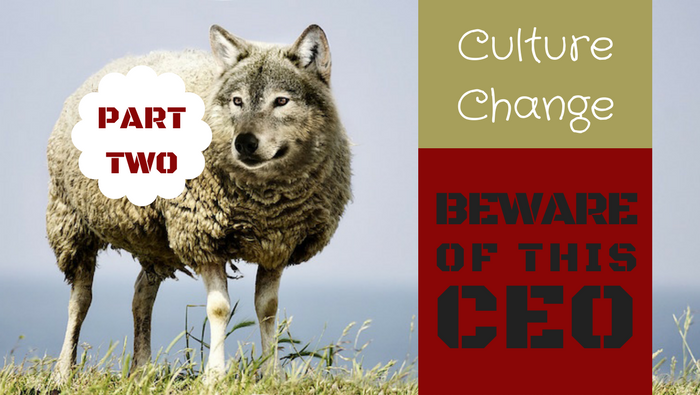
Culture Change: Beware the CEO Wolf in Sheep’s Clothing, Part 2
Attention!
Don’t read this post until you’ve read Part 1.
/
/
In last week’s “Case Study”, we left off where the HR Manager had informed the L&D company that the CEO had decided not to engage them for the 3-year contract and that they would be seeking a different vendor.
/
But before we get into “What the Heck Happened?!”, I’m going to come clean on something …
/
This scenario actually took place. I know, because I lived it. I’m not going to say what organization this was, for two reasons:
/
1. The Nature of Truth
The facts of this story are accurate. Others people’s emotions, intentions and beliefs I put forth are my interpretation, that is, they portray my truthful experience. I acknowledge that the truthful experience that other people involved had may be different than mine.
/
2. Lawsuits Aren’t Fun
I share this story so that others may learn from it, not to defame anyone or any organization. I hold no malice!
/
So, that being said …
/
/
What I Think Happened:
/
Are you familiar with Aesop’s fable, The Scorpion and The Frog?
/
If not, here’s a great 2-minute video by Way Singleton that will bring you up to speed:
/
<iframe src="https://player.vimeo.com/video/106923968" width="640" height="360" frameborder="0" webkitallowfullscreen mozallowfullscreen allowfullscreen></iframe><!-- [et_pb_line_break_holder] --><p><a href="https://vimeo.com/106923968">The Scorpion and The Frog</a> from <a href="https://vimeo.com/waysingleton">Way Singleton</a> on <a href="https://vimeo.com">Vimeo</a>.</p>
/
Here’s how this cautionary tale links up with my story:
/
/

The frog represents the people in the organization who want to work within a culture of cooperation and collaboration.
/

The shore the frog and the scorpion are swimming to is where that culture exists.
/

The scorpion is the CEO, with one distinction:
regarding it’s nature, the scorpion is self-aware … this CEO, I fear, is not.
/
/
As a Certified Professional Behavioural Analyst, my observations of this CEO indicate a High-D (Dominant) profile, based on the DISC model of behavioural analysis.
/
Now, there are certain characteristics of a CEO with a High-D profile that are generally assets when they choose to champion something:
/
-
Innovative
-
Forward-looking
-
Persistent
-
Problem solver
-
Challenge-oriented
-
Results-oriented
/
However, here are some other characteristics of someone with a High-D profile:
/
-
Demanding
-
Competitive
-
Argumentative
-
Opinionated
-
Aggressive
-
Egotistical
-
Lacks tact and diplomacy
-
Gets angry when stressed
/
/
See the problem in this situation?
/
I see this CEO’s natural behaviour in stark contradiction to the kind of culture this CEO is the self-proclaimed champion for.
/
It’s like the CEO is saying,
/
“We need to create a culture of cooperation and collaboration, one that values diverse opinions that everyone feels encouraged to share.
“This has to be accomplished by the end of this fiscal year and I know exactly what needs to be done and what each of you has to do. If you’re not on board with this then you don’t belong here.”
/
If this organization is to successfully manifest this culture change, I think one of two things needs to happen:
/
One:
Their CEO needs to become self-aware of the contradiction I’ve described and learn to adapt their behaviour to be in sync with the desired culture change.
/
Two:
Get a different CEO, one that is more suitable for this far-sweeping initiative.
/
If one of these two things don’t take place, I fear this culture change is doomed to fail.
/
That being said, I truly hope they’re able to pull it off.
/
Have a productive and enjoyable day!
/
/— Brie
Culture Change: Beware the CEO Wolf in Sheep’s Clothing, Part 2
Attention!
Don’t read this post until you’ve read Part 1.
/
/
In last week’s “Case Study”, we left off where the HR Manager had informed the L&D company that the CEO had decided not to engage them for the 3-year contract and that they would be seeking a different vendor.
/
But before we get into “What the Heck Happened?!”, I’m going to come clean on something …
/
This scenario actually took place. I know, because I lived it. I’m not going to say what organization this was, for two reasons:
/
1. The Nature of Truth
The facts of this story are accurate. Others people’s emotions, intentions and beliefs I put forth are my interpretation, that is, they portray my truthful experience. I acknowledge that the truthful experience that other people involved had may be different than mine.
/
2. Lawsuits Aren’t Fun
I share this story so that others may learn from it, not to defame anyone or any organization. I hold no malice!
/
So, that being said …
/
/
What I Think Happened:
/
Are you familiar with Aesop’s fable, The Scorpion and The Frog?
/
If not, here’s a great 2-minute video by Way Singleton that will bring you up to speed:
/
<iframe src="https://player.vimeo.com/video/106923968" width="640" height="360" frameborder="0" webkitallowfullscreen mozallowfullscreen allowfullscreen></iframe><!-- [et_pb_line_break_holder] --><p><a href="https://vimeo.com/106923968">The Scorpion and The Frog</a> from <a href="https://vimeo.com/waysingleton">Way Singleton</a> on <a href="https://vimeo.com">Vimeo</a>.</p>
/
Here’s how this cautionary tale links up with my story:
/
/
The frog represents the people in the organization who want to work within a culture of cooperation and collaboration.
/
The shore the frog and the scorpion are swimming to is where that culture exists.
/
The scorpion is the CEO, with one distinction:
regarding it’s nature, the scorpion is self-aware … this CEO, I fear, is not.
/
/
As a Certified Professional Behavioural Analyst, my observations of this CEO indicate a High-D (Dominant) profile, based on the DISC model of behavioural analysis.
/
Now, there are certain characteristics of a CEO with a High-D profile that are generally assets when they choose to champion something:
/
-
Innovative
-
Forward-looking
-
Persistent
-
Problem solver
-
Challenge-oriented
-
Results-oriented
/
However, here are some other characteristics of someone with a High-D profile:
/
-
Demanding
-
Competitive
-
Argumentative
-
Opinionated
-
Aggressive
-
Egotistical
-
Lacks tact and diplomacy
-
Gets angry when stressed
/
/
See the problem in this situation?
/
I see this CEO’s natural behaviour in stark contradiction to the kind of culture this CEO is the self-proclaimed champion for.
/
It’s like the CEO is saying,
/
“We need to create a culture of cooperation and collaboration, one that values diverse opinions that everyone feels encouraged to share.
“This has to be accomplished by the end of this fiscal year and I know exactly what needs to be done and what each of you has to do. If you’re not on board with this then you don’t belong here.”
/
If this organization is to successfully manifest this culture change, I think one of two things needs to happen:
/
One:
Their CEO needs to become self-aware of the contradiction I’ve described and learn to adapt their behaviour to be in sync with the desired culture change.
/
Two:
Get a different CEO, one that is more suitable for this far-sweeping initiative.
/
If one of these two things don’t take place, I fear this culture change is doomed to fail.
/
That being said, I truly hope they’re able to pull it off.
/
Have a productive and enjoyable day!
/
/— Brie
© 2018 Connected Conversations™
by Brie Barker | Leadership Development
My leadership blog is all about helping current and emerging leaders learn how to transform difficult conversations and dysfunctional workplace relationships into positive and productive ones.
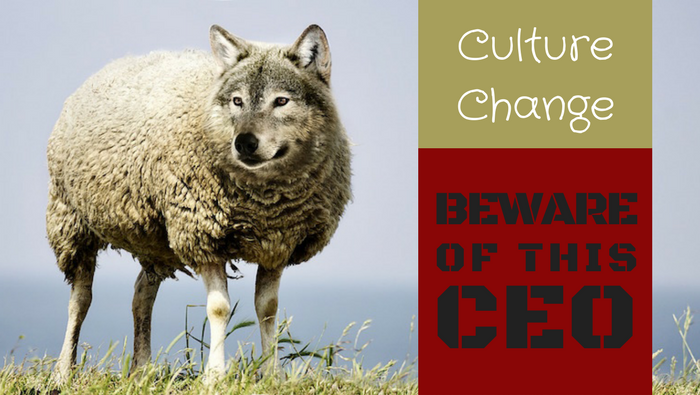
Culture Change: Beware the CEO Wolf in Sheep’s Clothing
Most would agree that it’s almost impossible to successfully bring about a major culture change throughout an organization without it’s leader as the ultimate champion of the initiative.
/
However, this very same leader/champion can also be the reason the desired culture change is doomed to fail.
/
/
Culture Change “Case Study”
Part 1 – Things Are Looking Up!
/
A fairly large, decades-old organization has the following cultural characteristics:
/
⇒ a command-and-control approach to leadership and management
⇒ a culture of isolated and competing silos
/
The organization’s CEO has decided that there has to be a significant shift if they’re going to survive and thrive — a shift that creates a culture of genuine collaboration and cooperation.
/
Most of the organization’s executives, managers and general staff agree with the CEO and are excited to see the CEO assume the role of champion for the change.
/
The CEO tasks the HR Manager with issuing an RFP to external learning and development companies to outline, then design and deliver, a 3-year program that will change the necessary attitudes and behaviours required to manifest the culture change.
/
The selection committee — which includes the CEO — awards a company the initial contract, which calls for a pilot workshop for the entire C-Suite and a representative from each department. Pending a favourable outcome, the company will be awarded the full, 3-year contract.
/
“Wow!” I hear some people saying. “I know a few organizations that would kill their prize sheep for a CEO like this!”
/
The selected L&D company comes in and delivers the pilot workshop. They’ve not only has given the organization everything they wanted to see based on the RFP and subsequent discussions, but the methodologies embedded in the design of the workshop modelled the values and collaborative approach the CEO wanted to see instilled in the organization.
/
The HR Manager was highly impressed.
/
A few days later, the HR Manager informs the L&D company that the CEO has decided not to engage them for the 3-year contract and that they will be seeking a different vendor.
/
“Uhhhh … what’s that, Brie?”
/
/
Culture Change “Case Study”
Part 2 – What the Heck Happened?!
/
Leave a comment with what you think could have happened to derail this train!
/
Next week, I’ll share with you what I think happened and what we can learn from it.
/
Have a productive and enjoyable day!
/
— Brie/
/
P.S. Did you think the quotation marks I bracketed Case Study with were an indication of punctuative ignorance?
Culture Change: Beware the CEO Wolf in Sheep’s Clothing
Culture Change: Beware the CEO Wolf in Sheep’s Clothing
Most would agree that it’s almost impossible to successfully bring about a major culture change throughout an organization without it’s leader as the ultimate champion of the initiative.
However, this very same leader/champion can also be the reason the desired culture change is doomed to fail.
/
/
Culture Change “Case Study”
Part 1 – Things Are Looking Up!
/
A fairly large, decades-old organization has the following cultural characteristics:
/
⇒ a command-and-control approach to leadership and management
⇒ a culture of isolated and competing silos
/
The organization’s CEO has decided that there has to be a significant shift if they’re going to survive and thrive — a shift that creates a culture of genuine collaboration and cooperation.
/
Most of the organization’s executives, managers and general staff agree with the CEO and are excited to see the CEO assume the role of champion for the change.
/
The CEO tasks the HR Manager with issuing an RFP to external learning and development companies to outline, then design and deliver, a 3-year program that will change the necessary attitudes and behaviours required to manifest the culture change.
/
The selection committee — which includes the CEO — awards a company the initial contract, which calls for a pilot workshop for the entire C-Suite and a representative from each department. Pending a favourable outcome, the company will be awarded the full, 3-year contract.
/
“Wow!” I hear some people saying. “I know a few organizations that would kill their prize sheep for a CEO like this!”
/
The selected L&D company comes in and delivers the pilot workshop. They’ve not only has given the organization everything they wanted to see based on the RFP and subsequent discussions, but the methodologies embedded in the design of the workshop modelled the values and collaborative approach the CEO wanted to see instilled in the organization.
/
The HR Manager was highly impressed.
/
A few days later, the HR Manager informs the L&D company that the CEO has decided not to engage them for the 3-year contract and that they will be seeking a different vendor.
/
“Uhhhh … what’s that, Brie?”
/
/
Culture Change “Case Study”
Part 2 – What the Heck Happened?!
/
Leave a comment with what you think could have happened to derail this train!
/
Next week, I’ll share with you what I think happened and what we can learn from it.
/
Have a productive and enjoyable day!
/
— Brie/
/
P.S. Did you think the quotation marks I bracketed Case Study with were an indication of punctuative ignorance?
© 2018 Connected Conversations™

by Brie Barker | Leadership Development
Trust is the lifeblood of effective, enduring leadership.
Want your employees to trust you enough to follow you just about anywhere?
Here are 4 things you can do to earn trust as a leader.
Read the following list while embracing two important concepts:
» Trust is based on the emotional connections between people, not on the connections between people on an org chart.
» Heed the good advice of Aristotle that any good novelist, playwright or screenwriter does: character is action.
1. Show Your Face:
You know the show Undercover Boss? Strive to never be a viable candidate for that show. You want to be the boss that every one of your employees will take one look at in that disguise of yours and say, “Hey, nice try! I know who you are!”
But it needs to go beyond that.

©DonkeyHotey
Don’t be that holy visitor from the top floor who walks briskly through the cube farm and bellows Pythonesque pomposities like, “Morning, Johnson! Keep up the good work now!”
You need to know who they are. You need to demonstrate you care about them by taking an interest in who they are and what their day-to-day working reality is all about: what the value they bring to the organization is, what their challenges and suggestions are.
If you’re leading such a big group of people that the goal of knowing all of them is just not feasible, you should still schedule a regular time in your calendar to make the rounds and have some meaningful face time with as many as you can. This is not an all or nothing scenario.
Trust is based on relationship. The person who is trusted never has to say, “Trust me,” and will never hear the reply, “Trust you? I don’t even know you.”
2. Put Your Employees’ Interests Above Your Own:
If you poll your employees about whether or not they trust you, many of them will filter this question as, “Do I trust them to do what’s best for me?” Or, in other words, do they think you’ve got their back; that, when the chips are down and things get tough, do they trust that you’ll put their interests before your own personal interests.
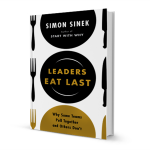
For a deeper exploration of this, delve into Simon Sinek‘s latest book, Leaders Eat Last.
For a more concise affirmation, trust Spock’s statement, “The needs of the many outweigh the needs of the few – or the one.”
3. Lead by Example:
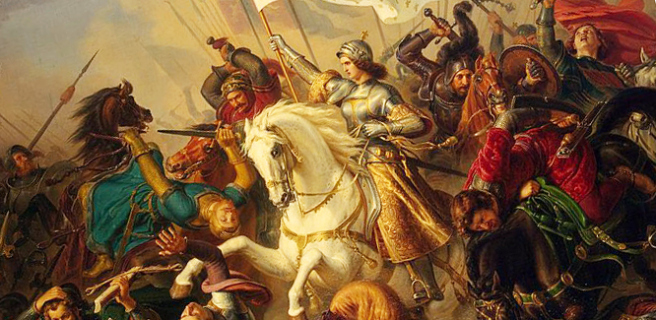
Think about any movie you’ve ever seen that involves an armed battle. Now think about the leaders of each opposing side. Which side almost always emerges victorious? The side whose soldiers have the most trust in their leader — the side who’s leader joins them in the actual battle, not the one who commands from the safety of the rear.

If you’re calling on your employees to sacrifice for the good of the organization, you need to sacrifice, too. You need to be right there in the trenches with them, sleeves rolled up, showing them you believe in the cause you’re asking them to fight for.
4. Trust the People You’re Leading
Another key factor in earning the trust of your employees is demonstrating that you trust them.
I’m not talking about throwing people into the deep end, just assuming they can swim to the other side, and then saying, “Hey, I gave you a chance to prove yourself and you blew it. From now on you don’t leave the shallow end unless I’m there to watch you.” The only people who should be micro-managed are those who respond well to being micro-managed.
Rather, give your employee a goal to accomplish, ask them to devise and show you their plan to achieve it, offer any necessary guidance, and then get out of the way and empower them with 100% trust to accomplish it. Based on the results, adjust the amount of active support you need to give them. You’ll soon discover what their full abilities are: if they meet or surpass the expected standard, great, you know you can trust them to get the job done; if they don’t meet the expected standard, you can collaborate on a learning and development plan to address the areas of needed improvement. Do this and they’ll trust you have their best interests at heart.
 “The best way to find out if you can
trust somebody — is to trust them.”
— Ernest Hemingway
Have a productive and enjoyable day.