by Brie Barker | Leadership Development
Introducing Guest Blogger Judy Kiar:
Judy Kiar is an Ottawa therapist with over thirty years experience who, for the past fifteen years, has been serving individuals, couples and families through her private practice, Judy Kiar Counselling.
Judy’s guiding philosophy is so in step with mine that I only have to change two words of it to make it reflect my work specifically (my replacement words are in green):
“Life/Work is a complicated endeavour full of challenges as well as joys. It is a sign of good mental/professional health to recognize when things aren’t going well and to seek help to improve them.”
In her practice, Judy has seen the terribly destructive consequences that a dysfunctional workplace relationship can have on someone’s life. I hope you appreciate what she has to say; I know I do.
Have a good read and I wish you an enjoyable and productive day.
Brie
The Workplace Relationship Dance
by Judy Kiar
 Relationships come with most workplaces. Most of the time we don’t get to choose whom we work with. We end up spending more waking hours with some colleagues than with our families and friends. Many times these relationships are governed by the hierarchical structure of the work place. Sometimes they are affected by competition for advancement. It’s inevitable that irritations or conflicts will arise from time to time. Because our work-lives are crucial to our financial and professional success, problems within them can feel life threatening. It’s important to minimize interpersonal conflict and learn to maintain healthy working relationships.
It seems to be human nature to want to blame the other person and wish they would be more like us. The truth though, is that you cannot change another person. You may be able to influence or encourage them, but ultimately, the only person you can change or control is you. Ironically, you are probably the most powerful tool you have in improving your relationships with other people.
Some of the best books written on building healthy interpersonal relationships, in my opinion, are Harriet Lerner’s Dance of Intimacy and Dance of Anger. Lerner conceptualizes relationship interactions as dances. We get into habits of acting and reacting in certain ways with each other. Some of these work well and some don’t. Often we get caught up in the dance and don’t really break it down to figure out all the steps that are making it turn out the way it is.
In the work place, we can become very aware of what other people are doing or not doing. If we are not happy with the way another person acts its easy to re-act in ways that show our disapproval, without actually communicating the problem to the other person. Shooting dagger-glances at a colleague, who has a habit of whistling while he works, just sets in motion a non-verbal communication, which might have no basis in reality. Whistler whistles, you glare, whistler assumes you don’t like him and glares back, this confirms your negative view of him and his of you. Before you know it you are no longer greeting each other in the hallways. You spend time and energy complaining about each other with coworkers and friends. The workplace has become toxic and our stress levels are through the roof!
The first step is to look at the dance as a whole and then break it down into its steps. Look at what you did and what the other person did. Think about how you felt along the way. What motivated you to act the way you did? Were you taking things personally that perhaps were not about you? Try to imagine what message you were sending with your actions. Ask yourself if you feel good about your part in the dance. Could you have been more direct, more empathetic, or more reasonable? Were there other things you could have done? Did other factors or feelings influence your behaviour?
The next step is to think about how you would prefer the interaction to go. You may feel overly responsible or overly criticized. What could you do to get that balance more in line with how you want to feel? What might happen if you look after your own feelings in the dance and change a few of your own, automatic steps?
Try not to take things personally. If there is something you can ask the other person to change, then ask in a polite, straightforward and respectful way. If you just don’t like them, try to cultivate an attitude of acceptance. Don’t make assumptions about them and don’t harbor grudges. Don’t waste energy dwelling on what you don’t like. Be on the look out for things that you do. You want to cultivate a live-and-let-live attitude wherever possible. The more you act in a positive, professional and friendly manner the more likely it is that you will be repaid in kind.
Sometimes, people are really resistive to change and will try really hard to get you to go back to an old familiar dance – even if it does not serve them well. If you hold firm and resist the urge to get back into those old steps, you are almost guaranteed to change the whole dance – one way or another. You have that power.
Get in the habit of looking at your own steps in all your relationships and see where you might like to try some new moves. Nobody gets a new dance right the first time. It’s going to take practice. Being good dance partners means being in-tune with each other and responding appropriately. Try to remember that perfecting the moves together is the only way to stop getting your toes stepped on when doing the workplace relationship dance.
You can reach Judy Kiar at ju**@******ar.com, 613-521-8800, www.judykiar.com.

by Brie Barker | Leadership Development
The saying that “people don’t quit their jobs, they quit their boss” holds a lot of truth. If you’ve had a such an experience, you’re not alone. Actually, I’m right there with you. However, there’s a deeper truth.
Back in my twenties, had I known then what I know now about how to manage difficult workplace relationships, I wouldn’t have made what you would call a significant CLM – career limiting move.
At the time, I was working in residential real estate in Toronto. Though I was a licensed agent, I was working as an assistant to a superstar. She was extremely successful. She’d been in the business for eons and was #1 in sales for the company, perhaps #1 in the whole city. I thought this was a great way for me to learn the ropes while receiving a more stable income base. It turned out to be a disaster in the making.
It didn’t take long until it became pretty obvious that we weren’t getting along. I thought she was cold, condescending and intent in keeping me in a box — I was feeling very micromanaged and my stress level was only climbing week-to-week. When I finally just couldn’t take it anymore, I quit. And I didn’t do it quietly. I was intent on shaming her publicly, letting the whole office know exactly what I thought of her and I why I was leaving. I left feeling victorious and vindicated.
A few years later, I had the idea of having a real estate company hire me to establish and run an in-house marketing department. One of the first companies I thought of pitching this to was the one I just told you about. After all, they were a top company, I knew their VP thought well of me and, as far as I was concerned, I knew that everything I had said about my former boss was true. So I set up a meeting with the VP.
Well, he loved my idea and thought that I was just the right person who could make it happen. I was feeling really good about myself in this moment. Then came the “but”.
He said that he couldn’t hire me because he couldn’t run the risk of offending my former boss, that, regardless what anyone thought of her, he couldn’t afford to lose his #1 agent. So, there it was — a bridge well burnt. A lesson well learned.
But all I learned at that time was the consequences of burning a bridge.
So here’s the deeper truth in the “people quit their boss” scenario …
… when someone’s communication style is in conflict with their boss’s communication style and neither party has sufficient emotional self-awareness, nor adequate enough communication skills, to bridge the differences, the resulting dysfunctional relationship can be so stressful that the person sees no other option but to quit the job.
It was easy for me to say the toxic relationship I had with my boss was her fault. I’ve no doubt that my boss thought that I was entirely to blame. In my departure, probably the both of us thought we won when, in fact, we both lost.
I know how horrible it is to feel caught in a toxic relationship with a boss. I now understand what it’s like for a boss to feel stuck in such a relationship with an employee.
What I focus on in Connected Conversations is teaching you how you can bring debilitating workplace relationships back from the brink of disaster and transform them into positive and productive ones; and have new relationships be on track from day one.
I’ll end this post with two thoughts for my former boss: “I’m sorry” and “thank you.”
Have an enjoyable and productive day.
Have you ever “quit your boss”? What’s your story?

by Brie Barker | Leadership Development
Remember the premise for this series of posts: the quicker you’re able to identify and adapt to someone’s communication style, the better you’ll be able to get that relationship off to a good start right out of the gate. This is also particularly relevant if the relationship, by its nature, is a brief and important one.
This week, I’m going to give you a high level look at the “C” dimension of the DISC model of behavioural styles, known as the Cautious style.
People who rank high in the “C” component exhibit more passive behaviour (as opposed to active) and are more task oriented (as opposed to people oriented).
General Attributes:
- Thinker
- Precise
- Systematic
- Analytical
- Conscientious
- High standards
Key Observable Characteristics:
- Verbal – talks about facts, doesn’t focus on feelings, more formal and focused
- Vocal – less variety in voice quality, little inflection, steady delivery, lower volume, slower rate of speech
- Visual – few facial expressions, few gestures, non-contact oriented, slower moving
Behaviour When Under Stress:
How to Communicate with Them Effectively:
Dos
- Provide accurate information
- Be practical and logical
- Be patient
- Show tact and diplomacy
- Give time for them to think
- Offer pros and cons
Don’ts
- Don’t refuse to explain the details
- Don’t answer questions vaguely or casually
- Don’t surprise them with new information
- Don’t ask for immediate decisions
Try putting these things into practice. Share your success stories by leaving comments!
Have an enjoyable and productive day.

by Brie Barker | Leadership Development
Remember the premise for this series of posts: the quicker you’re able to identify and adapt to someone’s communication style, the better you’ll be able to get that relationship off to a good start right out of the gate. This is also particularly relevant if the relationship, by its nature, is a brief and important one.
This week, I’m going to give you a high level look at the “S” dimension of the DISC model of behavioural styles, known as the Steady style.
People who rank high in the “S” component exhibit more passive behaviour (as opposed to active) and are more people oriented (as opposed to task oriented).
General Attributes:
- Good listener
- Team player
- Supportive
- Stable
- Predictable
- Friendly
- Understanding
Key Observable Characteristics:
- Verbal – listens more than talks, reserves opinions
- Vocal – steady and even delivery, lower volume, slower rate of speech, less forceful tone
- Visual – exhibits patience, gentle handshake, intermittent eye contact, slower body language
Behaviour When Under Stress:
- Submissive and indecisive
How to Communicate with Them Effectively:
Dos
- Be non-threatening
- Express genuine interest and appreciations
- Be patient
- Give time to adjust to change
- Ask about emotional needs
- Answer “how” questions
- Clearly define goals, procedures and their role
Don’ts
- Don’t be pushy or aggressive
- Don’t be demanding
- Don’t be confrontational
- Don’t rush them
Try putting these things into practice. Share your success stories by leaving comments!
Have an enjoyable and productive day.

by Brie Barker | Leadership Development
Remember the premise for this series of posts: the quicker you’re able to identify and adapt to someone’s communication style, the better you’ll be able to get that relationship off to a good start right out of the gate. This is also particularly relevant if the relationship, by its nature, is a brief and important one.
This week, I’m going to give you a high level look at the “I” dimension of the DISC model of behavioural styles, known as the Influencing style.
People who rank high in the “I” component exhibit more active behaviour (as opposed to passive) and are more people oriented (as opposed to task oriented).
General Attributes:
- Enthusiastic
- Persuasive
- Talkative
- Impulsive
- Emotional
- Trusting
- Optimistic
Key Observable Characteristics:
- Verbal – tells stories and anecdotes, shares personal feelings, informal speech
- Vocal – lots of inflection, higher volume, faster speech
- Visual – animated facial expressions, more hand/body movement, contact oriented
Behaviour When Under Stress:
- Sarcastic and superficial
How to Communicate with Them Effectively:
Dos
- Be friendly and light
- Let them talk
- Show interest
- Seek their input
- Use stories and emotional descriptions
- Give decision incentives
Don’ts
- Don’t do all the talking
- Don’t skip social elements of conversations
- Don’t dwell on details
Try putting these things into practice. Share your success stories by leaving comments!
Have an enjoyable and productive day. (Emphasis on enjoyable if you’ve got a lot of “I” in you!)

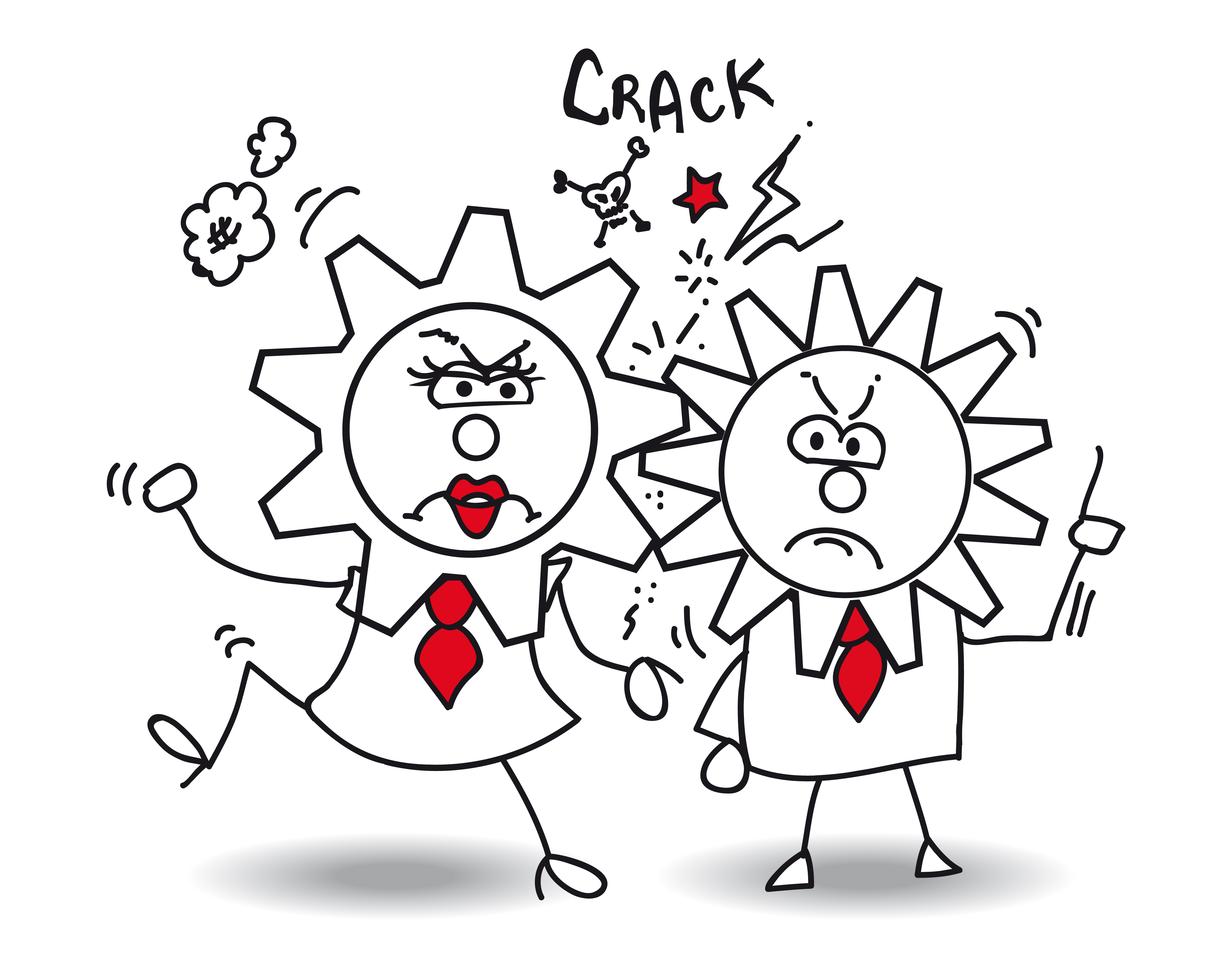 Relationships come with most workplaces. Most of the time we don’t get to choose whom we work with. We end up spending more waking hours with some colleagues than with our families and friends. Many times these relationships are governed by the hierarchical structure of the work place. Sometimes they are affected by competition for advancement. It’s inevitable that irritations or conflicts will arise from time to time. Because our work-lives are crucial to our financial and professional success, problems within them can feel life threatening. It’s important to minimize interpersonal conflict and learn to maintain healthy working relationships.